
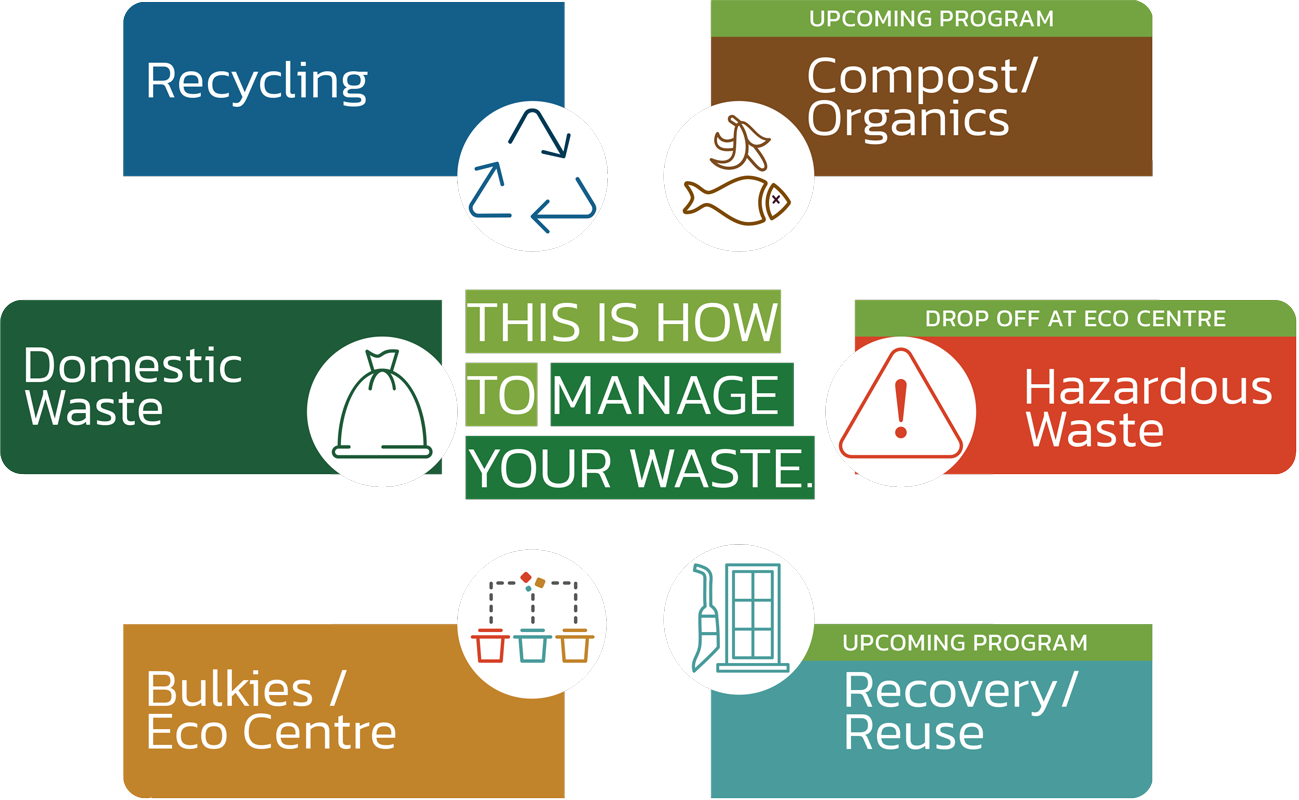
See the programs developed to help you divert waste as much as possible. Reduce your waste and do your part to keep our environment beautiful.
Curbside collection route and schedule
Don’t miss your weekly pickup. Find your section on the route map below, then check your collection days.
| Day | Morning | Afternoon |
|---|---|---|
| Monday | Section 1 — 🗑️ Garbage | Section 1 — ♻️ Recycling |
| Tuesday | Section 2 — 🗑️ Garbage | Section 2 — ♻️ Recycling |
| Wednesday | Section 2 — 🛋️ Bulky items | Section 1 — 🛋️ Bulky items |
| Thursday | Section 1 — 🗑️ Garbage | Section 1 — ♻️ Recycling |
| Friday | Section 2 — 🗑️ Garbage | Section 2 — ♻️ Recycling |
Weather cancellations: collection may be cancelled due to severe weather. Check our Facebook page for updates.
Which section am I in?
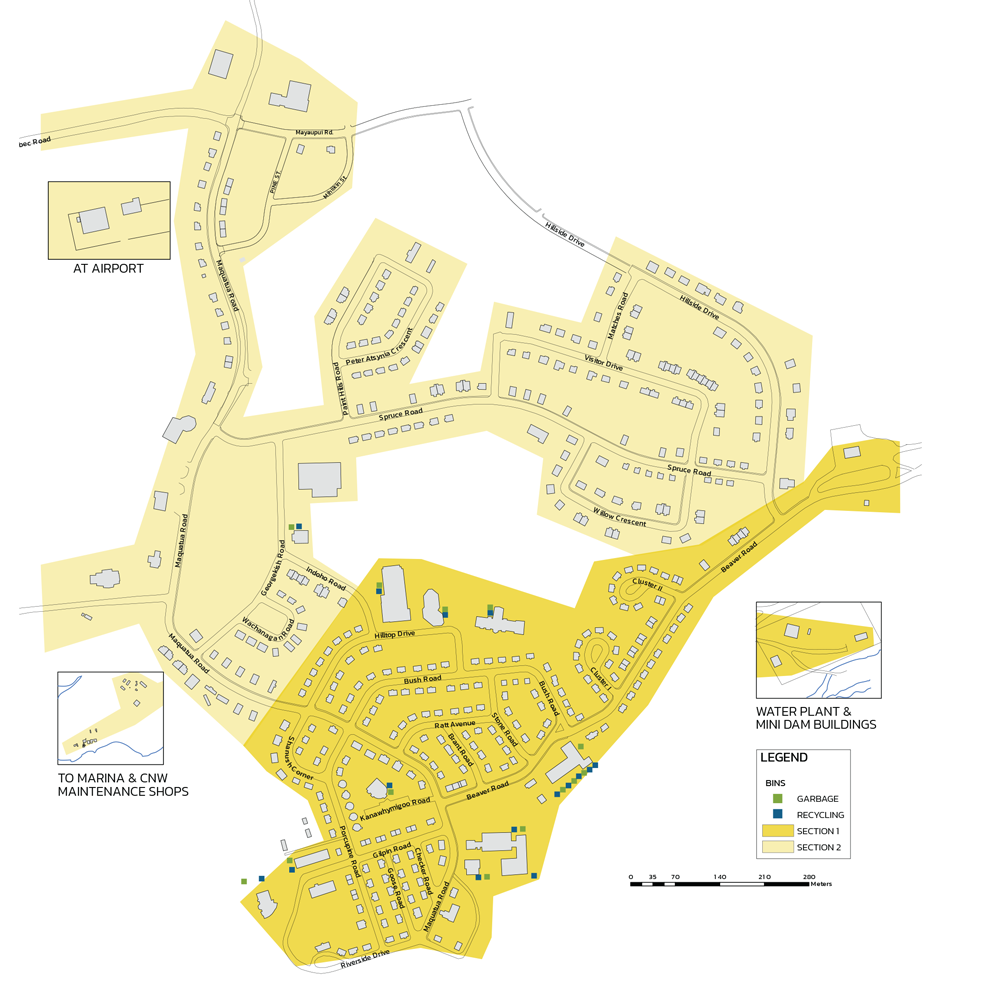
Section 1: LIST THE STREETS HERE.
Section 2: LIST THE STREETS HERE.
Our waste programs
Only 10% of what you throw out is really garbage. Here’s what’s inside your trash:
- 40% organic waste — compostable
- 40% recyclable waste — blue bin
- 10% domestic waste — green bin
- 9% Eco Centre waste
- 1% hazardous waste
♻️ Recycling
40% of your waste is recyclable. Wemindji’s recycling recovery rate is currently under 20%. A reasonable rate of recovery is closer to 60%, so we need to improve our household sorting to make sure all recyclable materials end up in the blue bin. The recycling program covers your home, your office, and recreational areas, both indoor and outdoor.
Three rules to improve our recovery rate
- When buying new products, look for the recycling symbol to be sure the packaging can be recycled.
- Rinse containers before putting them in the blue bin, so they are clean enough to be processed.
- Don’t miss your weekly collection — put your blue bin at the curb the day before.
What goes in the blue bin
- Plastic: containers with a recycling symbol, plastic bags (soft and stretchy), bottles, plates and cups
- Metal: tin, aluminum and steel cans, pie plates, trays and roasting pans — cleaned
- Glass: food containers and jars
- Paper and cardboard: paper bags, newspaper, flyers, cereal and snack cardboard boxes, printed paper glossy or not
Not recyclable: black plastic food containers and cutlery go in the garbage.
🗑️ Domestic waste
Domestic waste is only 10% of what you throw out at home. The golden rule: always consider reusing something before disposing of it. Controlling your waste at the source is the best way to manage it.
Only these items go in your green bin
- Liner bags from cereal, cookies and crackers
- Black plastic food containers, cutlery and lids
- Foam polystyrene meat trays — liners are garbage
- Cold drink cups and straws — recycle the lids
- Plastic bubble wrap and stretchy plastic food wrap
- Laminated plastic film — stand-up pouches, snack food bags
- Dryer and disposable mop sheets, baby wipes, make-up pads, cotton tipped swabs and dental floss
- Plastic or foil wrappers and aluminum foil
- Drink pouches and straws
- Hair, pet hair, feathers, nail clippings, dryer lint, candles and wax, cigarette butts and ashes
- Gum packages and blister packs
- Metallic gift wrap, bows and ribbons
- Broken mugs and dishes
- Diapers
- Animal litter
🌿 Composting
40% of your waste is compostable. As we work toward becoming Canada’s first Zero Waste First Nation, our landfill is currently made up of 40% organic waste that could be diverted to a composting platform, becoming organic material to close gravel pits and help our forest grow.
What the collection will accept
- Food waste: table scraps, hunted animal carcasses, fished seafood and fishes, meat and poultry including bones, fruits and vegetables, bread, pasta and cereal products, eggs and eggshells, coffee grinds, filters and tea bags, cheese, pet food
- Yard waste: small branches, indoor and outdoor plants, leaves and grass trimmings
- Other: non-plastic packaging, parchment, napkins and paper towel, newspaper and soiled paper, paper plates, cardboard boxes, pet litter
Equipment provided: an organic kitchen collector and an outdoor rolling bin.
🛋️ Eco Centre and bulky waste

The Eco Centre offers public disposal for wood, construction and demolition waste, hazardous waste, metals, bulky non-metallic items, and household recycling and waste. Residents are encouraged to drop these off at the Eco Centre rather than putting them in a curbside bin. Bulky waste is also collected curbside every Wednesday.
Open to the public 24 hours a day, 7 days a week for drop-offs.
Look for the signs at the site entrance to identify your waste category correctly and avoid contamination. There are eleven categories of bulky waste collected, with a bin for each: electronics, tires, appliances, propane tanks, unburnable waste, metal, recycling, untreated wood, glass, hazardous waste, and domestic waste.
Hazardous waste
Hazardous waste is dangerous for human and environmental health. Look for the words flammable, toxic, corrosive or reactive on your cleaning and maintenance products to identify household hazardous waste.
- Household cleaners and chlorine bleach
- Car maintenance products, antifreeze and brake fluid
- Electronic devices and batteries
- Drain cleaners
- Fire extinguishers and propane tanks
- Paint
- Other chemicals and combustibles
Hazardous waste must be dropped off by appointment. Call 819-978-3050 or 819-978-7509.
Recovery Centre
Our community is assessing the development of a Recovery Centre facility. It could save thousands of dollars in shipping, create local job opportunities, and reduce the amount of waste buried here every year.
Recovery and repair of reusable goods for sale
- Electronics — digital devices, TVs, printers, light fixtures
- Appliances — large and small appliances and devices
- Housewares — furniture, toys, objects, tools, auto parts, clothing and textiles
- Construction materials — treated wood, pallets, metal parts, tools, drywall, insulation, shingles, brick
Preparing materials for transport, recycling or safe disposal
- Hazardous waste — safe storage for export, including batteries, chemicals, paint, ink and petroleum products
- Domestic plastics — types 1, 2 and 5, for baling and export
- Domestic metals — aluminum and steel, for baling and export
- Paper and cardboard
Preparing materials for local transformation and reuse
- Glass — jars, bottles and Pyrex, for crushing
Want more details?
The waste management guide covers all our programs — sorting, collection, and what goes where.
Who to call
- Band Office: 819-978-0264
- Director of Environment: 819-978-0264 ext. 2250
- Eco Centre assistance: 819-978-3050
- Hazardous waste appointments: 819-978-3050 or 819-978-7509
- Bulky waste pick-up: 819-978-3050
- Fire Department / Public Safety: 819-978-3773